Blog

Bisexuality and Clinical Depression and Generalized Anxiety

A systematic review and meta-analysis by Ross and others[1] in 2017 examined 1,074 articles that reported bisexual-specific data on standardized measures of depression and/or anxiety. They looked at studies that reported mean scores and standard deviations for bisexual and comparison groups. They narrowed it down to 52 studies that passed stringent guidelines. Only eight of the 52 included studies that stated a bisexual-specific objective in their abstracts. Results indicated that bisexuals exhibited a consistent pattern of higher rates of depression and anxiety than heterosexuals and lesbian/gay people. They proposed that there were three interrelated contributors including sexual orientation- discrimination, bisexual invisibility, and lack of affirmative support. They argued that there was a lack of quality bisexual research despite evidence of greater mental health concerns.

Let’s first deal with the issue of invisibility of bisexual people. The answer is obvious, at least from the viewpoint of bisexuals. WE DO NOT WANT TO BE INVOLVED IN STUDIES. We prefer anonymity. Our sexual behaviors are private. We do not consider it a problem and certainly not cause for public concern. That would be true in most cases; however, we can’t ignore the number of us that are going through severe mental issues that seem to somehow be related to our bisexual nature. BISEXUALITY IS NOT A MENTAL CONDITION. Okay, that’s certainly true, but why are so many of us experiencing mental issues?

Secondly, let’s look at discrimination. Gay and Lesbian culture is now widely accepted by the general population but nonbinary, trans (especially men converting to women), and bisexuals are still facing a backlash. Transgender and conversion is a huge topic in itself so let’s leave that for another time. It is generally accepted that bisexuals face discrimination due to biphobia. It appears that the heterosexual community or the public at large seems to fear bisexuality as some kind of covert behavior that can lead to the weakening of the family and the general state of the community and country. It can be manifested as a disbelief in bisexuality as a valid identity – you are either a man or a woman and therefore should engage in sex as a heterosexual or as gay. The second issue is bi-erasure which refers to the tendency to deny or ignore our existence by both the general population and within the LGBTQ+ community. That would be good in itself; it is our own damn business. We want to be invisible so we can live our own lives and pursue sexual pleasures as our hearts so desire. But again, why the high incidence of clinical depression, generalized anxiety and suicide attempts. It is apparently an issue that cannot be ignored.

That brings us to the issue of lack of support. It would appear that the general population just want us to go away, or at least, just be quiet about our sexual tendencies. However, we may not have problems ourselves as individuals and we usually refuse to join groups of bisexuals for advocacy or just affirmation. I remember trying to start a meet-up group for bisexual people in Victoria BC. I immediately had close to fifty sign-ups. Another individual and I decided to have a meet-and-greet at our favorite breakfast venue. Nobody showed up except the two of us. However, the issue here is that as individuals we may be okay, but a very large number of us need to meet-up not for sex but just to talk about our issues and realize we are not alone. We also need to advocate for one another, not about our human rights, but about the unhealthy occurrence of mental issues among us.

                This brings us to the second major concern of this study – the lack of quality research with bisexuals as the major target population. We need to know a whole lot more about why so many of us are experiencing life-threatening mental health issues and then we have to start doing something about it.

Action Plan

  1. Many of us bisexuals need help and those of us who have gone trough our own Armageddon need to advocate for the help they need.
  2. We must work together to advocate for the meaningful inclusion of bisexual people in mental health research. We can advocate directly to our colleagues and acquaintances, and through our writing and involvement in professional associations.
  3.  There is certainly a need to address the mental health of individual bisexuals. We can advocate for affirmative support in the mental health sector. We can share information and resources about bisexual mental health. We can help people in decision making positions understand the need for intervention.
  4. We can be a voice in the LGBQR+ community to bring awareness of our specific gifts, talents and needs.
  5. There is no need for anonymity. There is nothing to be ashamed about. Like everyone else we are free to pursue sexual pleasures in our own unique way. Sex is meant to get the endorphins flowing for the establishment of meaningful relationships and creating a sense or well-being. If that is not happening, we may be in danger of becoming another statistic in mental health research.

[1] Lori E. Ross, Travis Salway, Lesley A. Tarasoff, Jenna M. MacKay, Blake W. Hawkins, and Charles P. Fehr. Prevalence of Depression and Anxiety Among Bisexual People Compared to Gay, Lesbian, and Heterosexual Individuals:A Systematic Review and Meta-Analysis. National Library of Medicine Published online: 03 Nov 2017. https://pubmed.ncbi.nlm.nih.gov/29099625/
Bisexual Men and Risk-Taking Behavior

  A study by Zhang (a geneticist at the University of Michigan) and Song found different genes drive bisexuality versus other same-sex sexual behavior. Zhang and Song mined a DNA database of some 450,000 people in the United Kingdom. They concluded that the genes underlying bisexual behavior are distinct from those driving exclusive same-sex behavior and may be intertwined with a propensity for taking risks.

Let’s first address the topic of risk-taking. Studies of twins have suggested that risk-taking traits may have a genetic component. The researchers found that bisexual and gay men may share some genetic variants, but the behaviors are genetically distinct from each other. They also found that bisexual behavior was genetically correlated with a propensity for taking risks in bisexual men, but not in bisexual women. Zhang and Song noted that about 23% of that behavior seemed to be related to genetics, and the environment (which seems to be missed in most studies) may play a bigger role in determining these kinds of traits. According to DSM 5, risk-taking describes a tendency to engage in reward-seeking actions despite the possibility of negative consequences. Research suggests that risk-taking in bisexual men may include unprotected sex (which we should always consider and respect) and promiscuity, which, in my opinion is a negative term for freedom for sexual exploration. It is also interesting to note that risk taking is one of the impairments or traits involved with borderline personality disorder (BPD). In previous posts we noted a positive correlation between bisexuality and BPD which may make it a confounding variable.

So what can we take from this connection between genetics and bisexual behavior? Very little. To say risk taking is a genetic trait of bisexuality is a big stretch. Some critics note that this is a study of sexual history, rather than sexual identity. Most of the people in the data base are more than 50 years old and grew up during a time when same-sex sexual experiences were illegal and frowned upon by society at large. This tends to present a negative view of bisexuality as some kind of genetic disorder. It is more likely that the environment may be a more dominant factor of BPD and may pertain to an older generation where men had to take risks because open gay sexuality was often forbidden. Take into account that many of these bisexual men were married or in relationships with women and perhaps had children, and we begin to see the possible causes of at-risk behavior. However, the reluctance to use protection may be an entirely different factor. Coming from the AIDS generation it may be related to suicidal tendencies or some form of self-punishment for engaging in what many religions referred to as sinful behavior.

So what is the positive spin that I can generate because I am just a blogger and can take wild stabs without empirical evidence.

  1. Bisexuality may have some genetic connections but there is no bisexual gene per say. There may be a combination of genes that may result in a genetic predisposition, but they have to be triggered by factors in the environment before they are activated.
  2. This is not a curse. Bisexuality is not a personality disorder and risk-taking behavior does not have to be an impairment or trait of a personality disorder. This genetic combination may also allow us the freedom to be who we want to be and do what we want to do.
  3. If we are bisexuals with BPD we should seek psychological help. But we do not rely only on cognitive therapy which attempts to change how we think. The combination of bisexuality and BPD goes much deeper than just thought and behavior. It involves powerful drives and when combined with environmental influences from religion and family, it can be devastating. We may need extensive empathic therapy to get to the basis of our negative feelings so we can be free to enjoy the power of our bisexual passions.
  4. If we are in a heterosexual relationship, we have to be honest with our partner. Secrecy can literally kill us leading to terrible guilt and suicidal behaviors. We now live in a much more compassionate society where relationships can be more open and honest. We can open up to our partner, let them know we love them, and want to maintain the relationship. But we let them know that we also have these desires for same sex relationships. We make sure we are prepared for the consequences.
  5. Be honest with ourselves. Bisexuality, whether it is genetic or has been forged my environmental influences or a combination of both, it is our reality. We can gain intense pleasure from same sex relationships. We can find friends with benefits that enrich our lives. We should not settle for less. And we always engage is safe sex practices out of respect for our partners and ourselves.

Bisexual behavior genetically tied to risk-taking, controversial DNA analysis find. Rodrigo Pérez Ortega. 3 Jan 2024 (https://www.science.org/content/article/bisexual-behavior-genetically-tied-risk-taking-controversial-dna-analysis-finds Epub 2024 Jan 3.

, Jianzhi Zhang and Siliang Song..Genetic variants underlying human bisexual behavior are reproductively advantageous. Sci Adv 2024 Jan 5;10(1):eadj6958.

Bisexuality, Nonbinary Nature, and the Human Heart

(The thoughts in this post are in no way meant to be critical for other people’s sexual experiences. They are simply part of my own life story.)

Bisexuality is much more complex than just the physical structures and chemistry of the brain. I also experience a variety of emotions such as joy and contentment when sex involves love, and confusion and self-doubt when I explore my sexuality through casual sex. After sex I often question things and wonder how it all fits into my life story and my love relationship with life-partners and family. I have an open relationship with my present life-partner, but I still have to deal with the feeling that my mate is the special someone who is at the core of my thoughts and feelings about sex and love relationships.

It is through our life-partners  that we may be involved in the production of offspring and the creation of a family. In my own experience, by being a father, I was able to  enter into a whole new dimension of love and sexuality. In my first marriage, when the children were younger and needed my contributions as a father, I kept my urges basically under control except for a few failures where I simply felt overpowered and ignored the possible consequences. However, once the children were grown up and were independent solid and productive human beings, all hell broke loose.  It resulted in my marriage break-up which I have regretted to this day. I was unable to let the love of my soulmate keep me from same-sex impulses. In my mind I could probably tell you why this had to happen, but I still view it as my own personal failure. My love was not strong enough to control my sexual impulses.

In spite of what I have deducted rationality, being nonbinary has had very little to so with my sexual urges. Being nonbinary simply means I do not adhere to widely accepted gender roles. I am free to form intimate relationships with both males and females, with or without sex. I am neither strictly male or female in the way I think and feel. I may be a combination of both or simply have socially evolved beyond restrictive standards established by society. I can experience freedom in gender identity switching from male to female based on my feelings or sexual expressions.  The female identity part of me may involve specific behaviors associated with being female like skills in social interaction and emotion regulation, while the male part of me might be involved in protection and providing. However, it is much more complex than that. At the root of it all is my desire for love and the need to overcome the complications placed on me by societal norms, morals, and expectations. In order to love myself I need to love being me and have the freedom to love whomever I want to love.

Sex for me has to be connected to love. After sex I need to linger in the moment to develop more love for myself and the one I am with. The male part of me uses dopamine and endorphins to pursue sex and enjoy body and brain pleasure. The female part of me uses serotonin after sex to help reinforce feelings of trust and relationship. Oxytocin is very powerful in my female side to help me sexually bond with my lover, so I have to be very careful with whom I have sex. Bonding means I have to give part of my emotional heart to my lover and receive part of my lover’s emotional heart in return. That means I have to connect at a deeper level of sex than casual hook ups. That means I have to have relationship before starting the sexual bonding process.

Yes, because of my nonbinary nature, I seek more intimacy with my partner with more touch, hugs, kisses, and perhaps sex. I explore the depths of love with my partner and share all those delicious feelings. Above all, I will never stop loving myself regardless of what I say or do. This love for myself lets me respect and appreciate the power of sex.  This love lets me respect and care for my present wife and any future potential sexual partners.

Bisexuality and the Human Mind

This next topic is very personal to me. There is no other topic that has caused me more concern and grief. I identify myself sexually as bisexual and gender as non-binary. That is not a problem – that is just my reality. But the problem then is how to keep this in balance, especially sexually. Specifically, how do I control my sexual urges that long to connect sexually with other males and females. Even more specifically I need to know if it’s okay to engage in hooking up just for the sexual experience which I have done occasionally throughout the years but not without concern and remorse. I also need to find clarity and consensus about open relationships. My life-partner and soulmate has encouraged me to exercise my gay side but I do not feel right about doing so.

From a strictly physical view,  I simply have sexual urges, the need for touch and sexual gratification. Some of this urge is part of my biological and chemical expressions connected with procreation. Beyond that I enjoy the wholesome intimacy I experience with my female partners, but I also enjoy the wild excitement I experience with my casual male partners. This is very confusing for me. On one hand I love the sensations that hit the pleasure centers of my brain when I engage in sex with someone new, but then I get all tangled up in in social and guilt issues. It can be very painful.

There is some evidence that my gender identity and sexual orientation are predetermined by prenatal exposure to testosterone and estrogen as well as to pheromonal input from the mother during the fetus stage. Of course, pheromones are obviously a major driver in all animals but not truly understood when it comes to humans. I can tell you it is real; I experience it at the subconscious level. As you know, the olfactory nerve connects directly to the frontal cortex of the brain, and it is through my sense of smell that I experience the pheromones of both females and males and am physically drawn to them. The heterosexual part of me includes my biological desire for procreation and bonding. The same-sex part is strictly a powerful urge for body-to-body connection coupled with sexual gratification. It can be a powerful physical high.

            Family and twin studies indicate that genes play a role, although no specific genes have been identified. It is through the activation of groups of genes from stimuli in the environment that has determined my bisexuality and nonbinary gender and my responses to sexual attraction that I have experienced during various stages of our life. My impulses have a lot to do with sexual regional connectivity and the differences in brain connectivity patterns between the presence of both male and female identification clusters within my brain. Having characteristics from both sexes impacts my sexual predisposition. A lot of my responses are governed by my body’s reaction to sexual attraction. Once my body is charged up for sex, it is very difficult for me to respond rationally.

My bisexuality and nonbinary gender identification has had a profound impact on my brain structures, rational functions, and neurochemistry. The mental component of sexual attraction for us bisexuals includes a range of factors such as sexual curiosity, sexual sensation seeking, and sexual excitability. When it comes to my nonbinary pursuits I have the qualities of both male and female brain functions. As a male I have a higher density of connections in the amygdala, which involves behaviors like aggressive pursuit for mating. The male side of my brain tends to be more efficient to lateralize and compartmentalize which has the advantage of making me more task-focused with less concern for consequences. The female part of my brain has a larger hippocampus for human memory and the maintaining of a life story. My female brain has more nerve connections with constant cross-signals. It takes in more so it tends to see how the sexual experience fits in with the bigger picture of life and family.

            The amygdala is often associated with fear and anger; however, it is also required when I work for rewards such as sexual pleasure and orgasm. For my male and female combined brain, the amygdala activates the neurochemicals; however, dopamine is initially much stronger in my male functions. When dopamine is released in my male brain, I immediately feel a sense of temporary pleasure, sexual arousal, and motivation to pursue resulting in a genital response. My female part of me, however, is slow in getting started but wants to prolong the experience. After orgasm dopamine levels decrease and serotonin levels increase. Serotonin usually decreases sexual behavior but creates a long-lasting feeling of happiness or well-being. Oxytocin is a hormone and a neurotransmitter that is sometimes referred to as the love hormone. It is more dominant in my female side then the male. The male part of me has had its rush and is ready to move on. In the female side Oxytocin levels increase during hugging, orgasm, and post orgasm and are associated with feelings of empathy, trust, and relationship-building.

As you can see, being bisexual and nonbinary have a strong clashing chemical iresponse making me sexually aggressive but much more sensitive. When it comes to casual sex and hooking up, the male part of me is satisfied and is ready to move on, but the female side of me wants to prolong the post orgasm experience and may feel that something is missing after casual sex. My mind also has to weigh social norms and expectations with my desire for sexual pleasure. This often leads to feeling of regret, shame, and guilt.

Alas, poor me, however, I am not a slave to my mind and body. There is part of me that can rationalize and control my impulses. I have to rely more on my heart for the pursuit of love for self and for the people with whom I have sex. Casual sex may meet my body and mind needs but it can be so much more. I need to follow my heart and seek more intimacy and deeper relationships.

Exploring Borderline Disorder – An Introduction

Twenty years ago while I was in the throes of depression, I received a diagnosis of Borderline Personality Disorder (BPD). I was an educational psychologist with a master’s degree in psychology, and yet, I had never fully understood BPD. Not until I started doing research for a series of blogs on BPD, have I come to fully comprehend the struggles I had endured and continue to experience from time to time and how these struggles related to my bisexuality.

Some of the research I have done on this site has indicated a high corrilation between bisexualtiy and borderline personality diosorder. Let’s be clear. Bisexuality is not a mental disorder, but BPD is. Unfortunately many of us bisexuals also have to deal with this disorder which makes it very difficult to enjoy our sexuality without feelings of guilt and shame. As borderliners we often have no sense of self and centainly place little value on ourselves. As a result we try to please others always feeling that they will eventually reject us. I have therefore decided to do an intensive study on BPD to help myself understand myself and then to help others.

This next series of blogs will be based on the lessons I have learned as a person, client, and patient with BPD salted with the latest research and the knowledge I have gained as a psychologist, cousellor, and teacher of Advanced Placement Psychology (which can be the equivalent of a first year university psychology class). These blogs are a combination of personal insights and the professional knowledge I have gained by learning to live with this disorder. I will also attempt to relate it to bisexuality and the problems we bisexuals experience because of our BPD traits.

I now pat myself on the back for not only surviving, but actually thriving, and I want to share my journey and the lessons I have learned with my fellow borderline and bisexual brothers and sisters. I will always live with some of the traits I will describe in these blogs; however, I have not only learned how to manage them, but I have used them to become a better person. I am now living the life I can truly love to live.

In this series of blogs I will give you a few hints on how to manage BPD, to thrive in spite of it, and perhaps even find meaning and purpose because of it. I also want to give those of you who live with loved ones with BPD some insights into what living with BPD is like and suggest some ways to help your loved ones cope with this complex mental disorder.  

       Let’s be clear about one important thing. Borderline does not mean borderline. This is a severe mental condition affecting the lives of millions of people often leading to suicidal behaviour. It was first noted in the 1940’s as a condition between neurotic (the brain) and psychotic (the mind) that could not be successfully treated by medication or traditional therapy. BPD is one of several personality disorders listed by the DSM5 that is used by psychologists all around the world as a diagnostic and theraputic tool. The DSM5 mentions thirteen pathological impairments that we will explore in this series of blogs.

Thirteen Impairments

Impairments in personality functioning

a. Identity:

  • Markedly impoverished, poorly developed, or unstable self-image;
  • Excessive self-criticism;
  • Chronic feelings of emptiness;
  • Dissociative states under stress.

b. Self-direction:

  • Instability in goals, aspirations, values, or career plans.

Significant impairments in interpersonal functioning

a. Empathy:

  • Compromised ability to recognize the feelings and needs of others;
  • interpersonal hypersensitivity (i.e., prone to feel slighted or insulted);
  • Perceptions of others selectively biased toward negative attributes or vulnerabilities.

b. Intimacy:

  • Intense, unstable, and conflicted close relationships;
  • Marked by mistrust, neediness;
  • Anxious preoccupation with real or imagined abandonment;
  • Close relationships often viewed in extremes of idealization and devaluation;
  • Alternating between over involvement and withdrawal.

My Five Suggestions for bisexuals who also have to cope with BPD

  1. Learn what you can about BPD by following this series of blogs.
  2. Get help if you need it by seing a counsellor or therapist.
  3. Try to understand how your BPD is affecting your sexuality.
  4. Make an inventory of your concerns as a person, and how it affects your sexuality.
  5. Make a commitment to yourself to be the best person you can be.

Two Spirit Culture and Bisexuality

I love the term Two Spirit which was first introduced by Ojibwa elder Myra Laramee in 1990. The term which came to her during a dream meant someone who holds both feminine and masculine energy or spirit. Even though it has been accepted as strictly an indigenous term, I can’t help but identify with the thoughts and feelings with which it is associated. Perhaps it is my Western French-Canadian background where many of us can claim an indigenous grandmother or great-grandmother or perhaps this just resonates with the nonbinary dual-gender nature many of us bottom-types have. Personally, I like the term because it not only deals with sexuality, but includes the combined male-female sexuality, gender, and spirit that is akin to many of us bisexuals. It is this spiritual sense of my bisexuality that I have learned to live with and eventually have come to accept and love.

The term is relatively new, but Two Spirit people have been part of the North American indigenous communities for centuries. They have been documented in over one hundred and thirty tribes in every region of North America. Two Spirit usually indicated persons recognized as neither men nor women but whose bodies simultaneously housed a masculine and a feminine energy or spirit. From the indigenous perspective, the term involved understanding of gender roles in daily functions. This included wearing various clothing, doing specific works, and fulfilling specific community roles. They were called upon for spiritual practices including being healers and medical practitioners, being keepers of oral traditions and songs, and giving names. They may have had special functions in sun dances or other religious ceremonies. They could be caregivers or parents to orphaned children.

Traditionally, sexual and gender diversity was an everyday aspect of life, but after European colonization the Two Spirit people in their communities were viewed as being perverted and were often humiliated and shamed. In recent times the Two Spirit ideology has been revived to counter negative attitudes. However, life can still be difficult for many Two Spirit people until they come to terms with the dual sexuality and dual gender nature. This includes loss of cultural identity, alienation from family and friends, and problems with coming out. Like many of us in the bisexual world they may be prone to drug and alcohol abuse. They may suffer from depression, sex addiction, and other mental health issues related to trauma. The results are often tragic. In an Urban sample in the United States, gay, bisexual, and Two Spirit men were more likely to be physically abused. Forty-five percent reported sexual abuse or assault compared to two percent in the general population.

Two Spirit women also may face extreme stigma regarding their sexual orientation. They are subject to racism from the wider society and from other sexual minorities. In a recent study of Two Spirit women, seventy-eight percent had been physically assaulted and eighty-five percent were sexually assaulted. This is four times higher than the general population. Most experienced abuse by multiple perpetrators, including family members, acquaintances, and strangers. Assimilation into white lesbian culture often caused disconnection from their indigenous relatives and communities.

In some articles that I have read, it has been decided to adopt the practice of placing ‘2S’ for ‘Two Spirit’ at the beginning of ‘2SLGBTQ’ to acknowledge that Two Spirit indigenous people were the first sexual and gender minority people in North America. It is also an opportunity to demonstrate solidarity with them in this period of truth and reconciliation in Canada. It may also be a good motivation for us to take a good look at the indigenous communities in the pre-white era as a model for change in how we view bisexuality and other people in the nonbinary communities. It’s a good beginning, but like in so many technical solutions real change has to be on the personal level.

So how can we be helpful as a friend or partner? We can develop connections with them in our communities. As bisexuals we may find that we have so much in common that we can become good friends. We can be good listeners. We avoid judgmental comments and unsolicited advice. We ask how we can be helpful and respect their decisions even though they may be different from the ones we would choose. Above all we can show love and respect. These are special people just as we all are special people. We have so much in common. Most of us bisexuals are Two Spirit in heart.

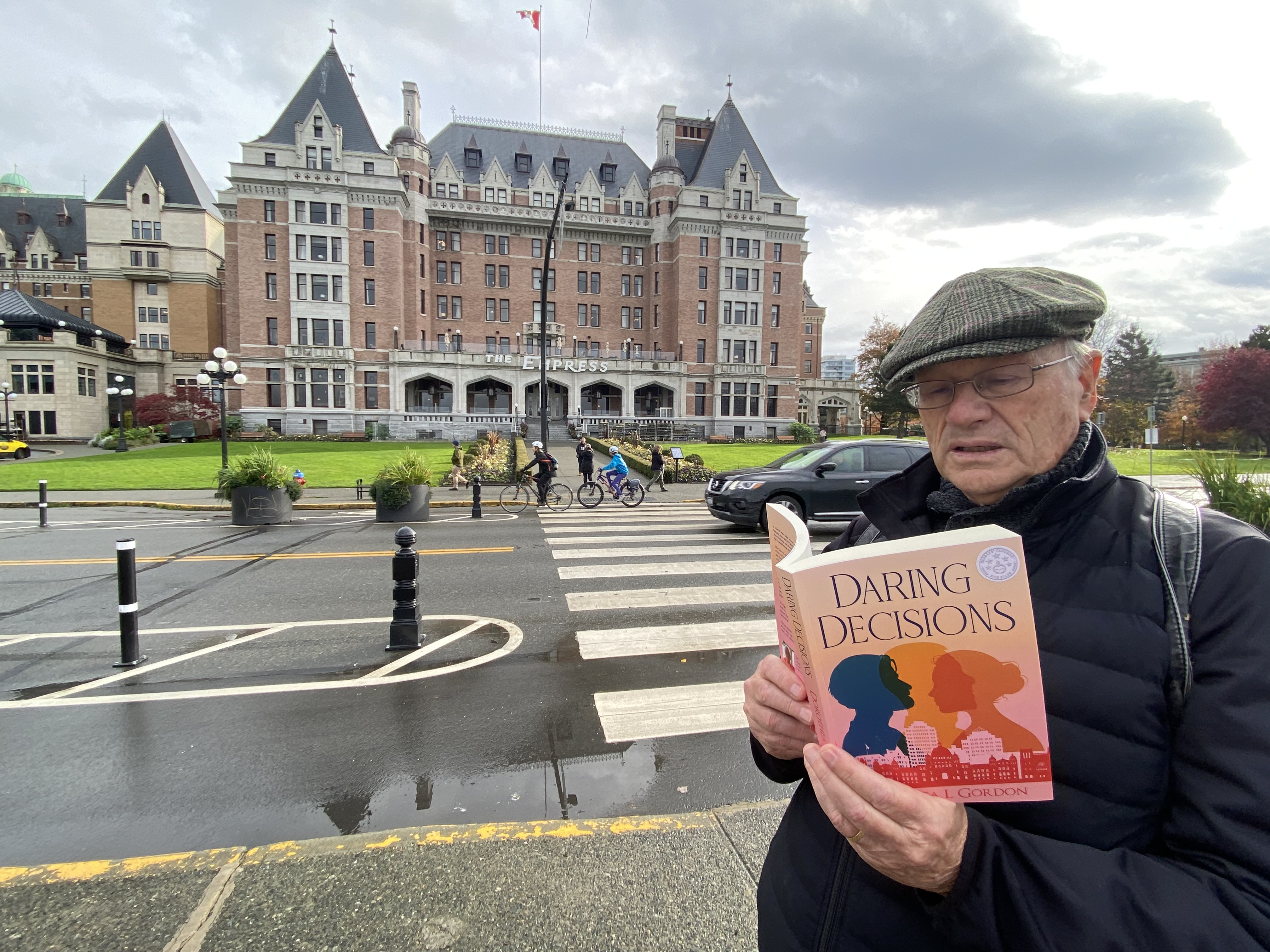
One of the reasons I have written this article after a long absence on this site is to let you know that my wife has written an excellent romantic novel involving bisexuality with a Two Spirit man as one of the main characters. He is a medical doctor whose wife divorced him when she found out he was bisexual. He never stops loving her even though he is married to another man. Would she be open to a menage-a-trois? Daring Decisions by Dorothea L. Gordon is a delightful read. It can be found on Amazon at: https://www.amazon.ca/Daring-Decisions-Dorothea-L-Gordon/dp/B0C87VXZHH

  • Ross, L. E., Gibson, M. F., Daley, A., Steele, L. S., & Williams, C. C. (2018). In spite of the system: A mixed methods analysis of mental health service experiences of LGBTQ people living in poverty in Ontario, Canada.PLoS ONE, 13(8),e0201437https://doi.org/10.1371/journal.pone.0201437

Borderline Personality Disorder, Bisexuality, and Empathic Capacity

(Over 2% of the population have some degree of BPD. Of this population 8 to 10% commit suicide – this rate is more than 50 times the rate of suicide in the general population and ten times the rate of suicides due to depression alone. This does not even include high-risk behavior that can lead to drug overdose. Approximately one-third of people with BPD also identify themselves as bisexual. If we reversed that, the number of bisexuals who have BPD traits, I believe the numbers would be much higher.  This blog is an attempt to understand the nature of one of the sub traits of disinhibition – risk-taking.)

Pathological personality traits in Disinhibition – Risk taking: lack of concern for one’s limitations. (DSM5)

We now move on to pathological personality trait 21 – lack of concern for one’s limitations. According to Fonagy and Bateman (2006), people with BPD may lack insight into their deficiencies in impulse control and empathic capacity which can lead to distortions in perceptions relating to self and others. The theory led to an interesting study my Morey (2014) who gave course instruction to 104 psychology students and then asked them to estimate their trait levels on the Five Factor Model of Personality. They then completed the Personality Assessment Inventory-Borderline Features Scale (PAI-BOR). High BOR individuals dramatically overestimated their levels of agreeableness and conscientiousness. Morey concluded that a key feature of BPD involves marked perceptual distortions of various aspects of self in relationship to others. Morey purposed that such individuals may have distorted insight into their capacity for cooperative relationships. There are three factors suggested here – empathic capacity, agreeableness and conscientiousness. Let’s begin with deficiency in empathic capacity.

Empathy is the capacity to understand and feel what another person is experiencing. We may actually sense and feel someone else’s emotions as if they are part of our own. In other words, someone else’s pain or happiness can become our pain or happiness. If we lack the ability to sense another’s feelings, it is defined as an empathy deficit disorder (EDD). A person with EDD may believe that only their needs are important, and may lack the ability to sense and appreciate the needs of others. This can result in difficulty forming and maintaining relationships and living in harmony with friends and loved ones. I believe that this is probably at the root of narcissism and anti-social personality disorders, but not BPD.

But does empathic capacity have to be a deficiency? Those of us with BPD tend to be oversensitive and not under sensitive. Fertuck (2012) found that individuals with BPD showed a heightened sensitivity to non-verbal cues when compared with people without BPD. The BPD group was more able to correctly guess what emotions were being expressed in pictures of eyes. They concluded that this showed an enhanced sensitivity to the mental states of others. In other words those of us with BPD may be super-skilled in sensing non-verbal cues such as eye expression, body language, and verbal tones.

            It appears that our high empathy skills may be an outcome of growing up in a traumatic and unpredictable childhood environment. Indeed, many of us have a history of abuse and neglect. As a response to confusing or neglectful parenting, we may have had to rely on our empathic functioning in order to protect themselves. We may have been self-trained by our environment to become highly attuned to the subconscious cues given out by parents and caregivers so that we could prepare ourselves for their unconscious behaviours. If our primary caretakers did not have the capacity to attune to our heightened perceptions, or even resented or were threatened by them, we may have consciously or subconsciously sabotaged our own emotional development. If our parents either explicitly or implicitly rejected us, we may have internalised the shame of being rejected, and experienced ourselves as being profoundly unloved and unworthy of love; however, we did what we could to preserve a good image of our parents even though they were incompetent, abusive, or neglectful. We naturally blamed ourselves because we still depended on them for our physical and emotional survival. We may have even forced ourselves to grow up prematurely so we could take care of our fragile parents.  We may have become emotionally unstable and have struggled all our lives feeling lonely, misunderstood, with the belief that there was something deeply wrong with us, and with the belief that our only function was to please and serve others. All of these factors can lead to a feeling of hopelessness and helplessness often resulting in indulging in high-risk behaviors.

            So how does this affect us bisexuals with BPD? I believe that one of the reasons we are so sexually active, even to the point of sexual addiction, is because we are looking for love, or at least, if not love, some sign that we are indeed desirable. Many of us are also bound by trying to use our sexuality to please others. In many cases our opposite sex relationships may have reached a point where we can sense that their non-verbal communication indicates that sex no-longer seems to thrill them (rejection), so we look for same sex experiences, usually with new partners, so we can experience their extreme forbidden  pleasure as well as our own. We often dabble in kinky stuff such as humiliation and degradation and perhaps forms of role-play involving punishment in order to exercise the demon that keeps telling us that all our abuse and neglect and our inability to please others, including our partners, is really our own fault. We often engage in unsafe sex or combine sex with dangerous drugs to heighten our sexual experience believing that if we die or get some fatal disease it is what we deserve anyway.

            While our heightened empathic capacity may be extremely painful, we should not immediately assume that it is a defect. It may be a gift. Psychologists recognize that empathy is one of the factors in personal intelligence (Gardner, 1985) which makes it a gift or talent rather than a deficit. Not all children who are neglected or abused end up with bisexual BPD; therefore, there may also be a genetic trait that is common to many of us that results in this disorder. Under favourable, circumstances, we could have grown up to have amazing abilities. If we had had an environment where we could have learned to set healthy boundaries and experience secure attachment without exploitation, we could have had an extraordinary ability to self-soothe and regulate our own emotions, have a sense of emotional stability under all circumstances, and a deep sense of internal wholeness. While the history cannot be changed, we can re-write the story that we keep telling ourselves. We are indeed worthy; in fact, we are gifted. We have a high level of awareness and acuity to verbal and nonverbal cues that is extremely precious. We are sensitive, intuitive, individuals who have the ability and potential wisdom to apply the right kind of nourishment to ourselves as well as to others. We have an ability to perceive our partner’s sexual experience and keep adjusting our love making to please them so we can heighten our own sexual pleasure. Because of our innate perceptivity, we can heal ourselves and help others heal themselves.  

            Perhaps there is a little voice within us that has always been there telling us we are special. If we can begin to listen to that voice, we can heal ourselves. Our amazing body wants us to heal so we can feel the full pleasure of our sexuality without feelings of guilt, shame, and rejection. Our mind wants to heal so we can enjoy the attributes or our empathic gifts. Our heart wants us to heal so we can love ourselves and find true intimacy with others. Our soul wants us to heal so we can share our amazing gifts to help please, heal, and nurture others. Once we can begin to recognise and trust our own fundamental goodness, our so-called pathological traits can become powerful tools to create the kind of life we will truly love to live. 

My five suggestions for bisexual Borderliners:

1. We rewrite our story. We recognize that we are gifted. We do not have EDD or even BPD. We are not dysfunctional. We simply function on a different plain.

2. We begin to practice self-love. Every time we feel that old impulse to hate ourselves we stop the noise, soothe our precious mind that is trying to protect us from further abuse, thank our mind for its due diligence, and let our heart express that we do indeed  love our SELF and have this amazing capacity to love and please others.

3. We let that voice from deep inside speak the truth that we are indeed worthy. In fact, we deserve to be treated as special because we are indeed special.

4. We take that painful trip back into our childhood and face the demons of the past. We acknowledge that our caregivers were weak and perhaps even abusive. We forgive and let go and then we pat ourselves on the back for surviving such a caustic situation.  

5. We begin to enjoy our sexuality without the negative feelings of being unloved and used and we stop trying to punish ourselves. We allow our empathic capacity to soothe our fragile self, grow, and enjoy our heightened sexual arousal and intimate pleasure for ourselves and our partner.

1. Fonagy P, Bateman AW: Mechanisms of change in mentalization‒based treatment of BPD. J Clin Psychol 2006,62(4):411–430. 10.1002/jclp.20241
2. Morey, Leslie C.. Borderline Personality Disorder and Emotion Dysregulation. Volume 1, Article number: 4. (2014)
3. Fertuck, Eric a.; Grinband, Jack; and Stanley, Barbara. Facial Trust Appraisal Negatively Biased in Borderline Personality Disorder. HHS Public Access. Published online 2013.

Bisexuality, Borderline Personality Disorder (BPD) and At-Risk Behavior

(Over 2% of the population have some degree of BPD. Of this population 8 to 10% commit suicide – this rate is more than 50 times the rate of suicide in the general population and ten times the rate of suicides due to depression alone. Approximately one-third of people with BPD also identify themselves as bisexual. The number of bisexuals who have BPD traits I believe would be much higher.  This blog is an attempt to understand the nature of one of the sub traits of disinhibition – risk-taking.)

Pathological personality traits in Disinhibition – Risk taking: Engagement in dangerous, risky, and potentially self-damaging activities, unnecessarily and without regard to consequences (DSM5).

                One of the sub traits of borderline personality disorder is risk-taking without regard to consequences. This trait shows up in several areas including drug abuse and at-risk sexual behavior. First of all let’s look at substance abuse.  Using a longitudinal study involving 1280 female adolescent twins from age 14 to 18, Bornovalovato and others[1] examined the developmental, genetic, and environmental factors underlying the co-occurrence of BPD traits and substance use. Shared environmental factors accounted for the association between BPD traits and substance use at age 14, but genetic factors accounted for the association at age 18.

                Looking at at-risk sexual behavior, Northey and others[2] asked 955 college students to fill out a questionnaire involving four BPD symptoms: affective instability, identity disturbance, negative relationships, and the tendency to self-harm. They then looked at the correlation of these four sub traits with sexual sensation seeking, sexual compulsivity, and sexual risk-taking. Sexual compulsivity was positively predicted by all four BPD symptoms. Sexual sensation seeking was positively predicted by negative relationships and self-harm. Sexual risk taking was not significantly predicted by any BPD symptoms. 

                So in plain English, what do these two studies tell us about risk taking for those of us with BPD. First of all we see that drug abuse seems to evolve during adolescence. Childhood is essentially a latent peaceful period with few outside traits or symptoms. However in adolescence we do not seem to have the eternal resources needed to withstand peer pressure – in this case, as it refers to drug use. In other words we use drugs because our friend use drugs. However by our late teen years when our friends are moving on, we seem to be stuck in drug use and drug abuse patterns because of our genetic predisposition. We use drugs perhaps because drugs fulfill an internal need for pleasure soothing and anxiety relief.

                When we look at sexual behavior, a similar pattern seems to exist. Because of our lack of self-esteem, we are vulnerable to the desire for the anxiety soothing and anxiety release provided by sexual pleasure and orgasm. This creates a situation where if it feels good we compulsively let ourselves become engaged without any concerns for the consequences often leading to risky casual unsafe sex. This also seems to be related to seeking the pleasure sensations as a kind of distraction from our inner turmoil rather than just for the excitement of risk taking itself. Once engaged, it appears that we may neglect the consequences simply because we feel we deserve to be treated badly and we may engage as a means to punish ourselves.

                When we look at us bisexuals with BPD, certainly at risk sexual behavior can be a major problem. There is still this desire out there for male bisexuals to have random sex without any condoms which can result in STD’s and even HIV and AIDS. Female bisexuals are not immune to unsafe sex either (particularly with males) but they do tend to listen to their brain and not just their genitals.

                These two studies indicate that some of our difficulties dealing with drug use and at-risk sexual behavior are related to genetic predisposition and our response to internal signals rather than external ones. Both drugs and sex appear to be our outlet for dealing with low self-esteem and the anxieties related to childhood issues. These behaviors appear to be impulsive because we either cannot or do not want to deal with the consequences because the pleasure involved is considered essential to our emotional survival, and we don’t give a damn if we die in the process.

My five suggestions for borderliner bisexuals:

1. We have to learn to deal with our compulsive behavior patterns by building in a reality check. I came across an experiment done a few years ago (sorry can’t find the reference) where overweight people tended to eat more shelled peanuts than non-overweight while waiting for an appointment, but the difference disappeared when the peanuts were still unshelled. This shows that compulsive behavior may be compulsive simply because it’s compulsive. For example I like to snack at night so I made a pact with myself to brush my teeth immediately after dinner and then remind myself that I should not snack because I would have to brush my teeth again. Sounds simple but it works. If we can build in a safety valve to give us time to think it through, and then make a conscious decision, then it is no longer compulsive.

2. We have to learn to care for ourselves including our beautiful brain. Drugs, even Maryjane, are mind-altering drugs. That means they alter the functioning of the brain by artificially changing the neurotransmitters and the neural circuits to the pleasure centers. If we love ourselves we will not do anything to harm our beautiful mind that is so well designed to find real ways to enjoy real pleasure.

3. Casual sex may provide a need for emotional and physical release and we can certainly make a case for allowing ourselves a little pleasure. However, this kind of behavior is usually based on not caring for ourselves and believing that no one truly could love us. This is not true. We can search for good sexual partners, either through partnership or on-going relationship, where we respect our sexual partner and we know they respect us (besides, the sex then is a hundred times better). Again this is a conscious decision which frees us from compulsive behavior.

4. Our sense of self-worth has to come from within. We can develop this like any other belief. We work at it. We make deals with ourselves. We recognize our achievements and our talents and gifts. We tell ourselves we love ourselves over and over again until we actually believe it. Then we start making conscious decisions based on that love.

5. We learn to love life, to get pleasure and satisfaction from the beauty of the world around us instead of drugs. We develop a true appreciation of the pleasures provided by wholesome sex with sexual partners who treat us as whole beings rather than just bodies or body parts.

Please Note: If you are serious about developing the skills needed to life a life free of anxieties that leads to at risk behavior, try my program – The Grounding Virtue – a Path to Self-Actualization.


[1] Bornovalova, M. A., Hicks, B. M., Iacono, W. G., & McGue, M. (2013). Longitudinal twin study of borderline personality disorder traits and substance use in adolescence: Developmental change, reciprocal effects, and genetic and environmental influences. Personality Disorders: Theory, Research, and Treatment, 4(1), 23–32. https://doi.org/10.1037/a0027178

[2] Northey, Lynnaea; Dunkley, Cara R.; Klonsky, David e.; and Gorzalka, Boris b.. Borderline personality disorder traits and sexuality: Bridging a gap in the literature. August 2016.

Bisexuality and Borderline Personality Disorder and Self-Harm Urgency

View Post

Over 2% of the population have some degree of (BPD). Of this population 8 to 10% commit suicide – this rate is more than 50 times the rate of suicide in the general population and ten times the rate of suicides due to depression alone. Approximately one-third of people with borderline personality disorder (BPD) also identify themselves as bisexual. The number of bisexuals who have BPD traits I believe would be much higher.  This blog is an attempt to understand the nature of one of the traits, disinhibition, so that we can survive and even thrive as bisexuals with BPD.

Pathological personality traits in Disinhibition -Impulsivity: A sense of urgency and self-harming behaviour under emotional distress (DSM5)

                Colle and other[1] looked at the relationship between self-harm and a sense of agency (feeling in control of the environment) in a small group of 20 BPD patients, nine of whom presented self-harming behaviors, and compared them with an age-matched control group. A sense of agency was evaluated through The Sensory Attenuation Paradigm, a comparison with externally generated sensations. The results of this study suggest that self-injurious actions constitute a coping strategy for increasing the sense of perceived control of the environment. The idea is that by inducing physical pain, patients may regulate feelings of distress related to loss of control, estrangement from reality, and experiences of numbness. Self-harm actions appear to enable a new set of emotional and physical sensations which allow the individual to feel alive or in control again by making a plan and carrying out an intentional action. However, the study suggests that the temporal relief afforded by NSSI behaviors is not effective for the long-term reduction of dissociative symptoms.

                 Fossati and others[2] looked at the relevance of emotion with negative and positive urgency (impulsivity) as it related to self-harm activities.  In their study involving 1,157 adolescents who were attending public high school in Italy, they used the Borderline Personality Inventory (a 53–item self–report questionnaire), the Difficulties in Emotion Regulation Scale (DERS), and the UPPS-P Impulsive Behavior Scale (a 59-item self-report measure designed to assess five impulsivity-related traits). Their findings provide support for the tendency for adolescents to act impulsively when experiencing heightened emotional arousal, both negative and positive.  Negative urgency frequently led to self-harm activities. Their findings also suggest that Positive Urgency may be the dimension of an impulsive predispositionto experience a positive sense of well-being by engaging in reckless behaviors such as heavy drinking or sexual promiscuity “just to celebrate” or “just to have fun”. These results suggest that both negative and positive urgency may be emotion-driven based on underlying fears related to BPD.

                These studies indicate that there are several factors involved in self-harm activities stemming from the disinhibition trait for people with BPD. The first is a sense of dissociation from reality. According to Cole and others self-harm activities may be an attempt to get back into a sense control over our own bodies and therefore a sense of control over our lives in general. The study by Fossati and others suggests that disinhibition may also be due to a sense of negative (to avoid) or positive (to pursue) urgency and this sense of urgency appears to be created by out of control emotional forces. The goal is either to fight or flee in the case of a negative impulsive drive or to experience pleasure in the case of a positive one. It may be that the urge to experience pleasure could be to find an outlet to experience something positive in an otherwise negative world. However, we also realize that this source of high risk pleasure is just another way to harm ourselves.

                When it comes to us bisexuals with BPD, we may be using our sexuality as a means to break out of our otherwise cold and impersonal perceived reality. This positive urgency or impulsivity may be the result of pent up negative emotion, pain, or just a need to break out of the often restrictive heterosexual lifestyle we have created. We set out to supercharge our feelings so that we can feel real again. Our same-sex self then becomes our reality and our heterosexual life becomes some kind of trap that we have created to help us survive. However, once we come down from that high, we realize that our heterosexual self is our real self and the life we truly want to hang on to.  Once in this state the same sex excursion can become a kind of self-harm activity where we continue our dishonest behavior in the hopes of destroying the lives we can no longer maintain. If we are not honest with our partners and live in an honest relationship this duality can lead to a breakdown where suicidal thoughts may appear to be the only solution.

My Five Suggestions for Borderliners

1. Recognize that you are in a struggle to avoid some pain by substituting forms of pleasure that are tainted by inappropriate motivation. You do not necessarily have to change the behavior but you will have to change the motivation. If you are engaging in sex to escape pain or a perceived negative dissociative reality it can become a compulsive addictive pattern.

2. Make a conscious decision to seek pleasure just for the sake of pleasure rather than letting it take over subconsciously. Once in a conscious state your sexual pursuits become a matter of choice rather than a compulsion. You are now free to enjoy your sexual experiences without shame or guilt.

3. Honesty is always the best policy and that has to start with being honest with yourself. If bisexual experiences are important to you and you are not in a relationship then by all means engage and enjoy. No shame. No guilt.

4.  If you are in a relationship you will have to make a conscious decision on whether or not to tell your partner. But be honest with yourself. If you are just hanging on to the relationship because you feel co-dependent or are relying on them and your relationship to escape fears of abandonment then this is not the reason to stay together. You may choose to make a conscious decision to keep your two lives separate and secret but this seldom works.

5. If you are genuinely in love with this person you are now free to make a conscious decision to stay with this person in a monogamous relationship or to explain your need for bisexual experiences with the realization that it may result in the end of the relationship. Either way make the decision consciously, don’t just let it happen.


[1] Colle, Livia; Hilvio, Dize; Rossi, Roberta;  Garbarini, Francesca; and Fossataro, Carlotta.  Self-Harming and Sense of Agency in Patients With Borderline Personality Disorder. ORIGINAL RESEARCH ARTICLE Front. Psychiatry 2020.  https://doi.org/10.3389/fpsyt.2020.00449

[2] Fossati, Andrea; Gratz, Kim L; Maffei, Cesare; and Borroni, Serena. Impulsivity dimensions, emotion dysregulation, and borderline personality disorder features among Italian nonclinical adolescents. Borderline Personality Disorder and Emotion Dysregulation. 2014.


Bisexuality, BPD, and Planned Sexuality

Borderline personality disorder (BPD) – pathological personality traits in disinhibition – difficulty establishing or following plans (DSM5).

                Over 2% of the population have some degree of (BPD). Approximately a third of people with BPD are bisexual. Of the BPD population 8 to 10% commit suicide; this rate is more than 50 times the rate of suicide in the general population and ten times the rate of suicides due to depression.  This blog is an attempt to understand the nature of one of the traits, disinhibition, so that we can survive and even thrive with BPD.

                As a society we seem to feel the need to label mental disorders so we can understand them and provide a platform for funding and treatment. In my case a suitable diagnosis was needed before I would qualify for long term disability. The danger of course is that we begin to become our labels which may interfere with the treatment we are attempting to obtain. However, labels can be useful if they give us a clear description of our traits so that we can create strategies to cope with them. I want to be perfectly clear. I no longer have BPD because I no longer have a disorder. I still have traits because they are part of my mental circuitry, but I now control them; they do not control me. I have gotten to this position through hard work, consistent self-analysis, and forcing changes upon my reluctant brain.   

                BPD is such a difficult mental condition to define as it covers a whole spectrum of negative and harmful thought and behavior patterns. Since the DSM5 has been published psychologists have been scrambling to put the traits listed in measurable terms to define a condition that seems to be too broad to define. However, it is generally acknowledged that detailed definition is needed before we can identify the specific patterns in order to make specific strategies to change them.

                One of the difficult areas to define is disinhibition, particularly being able to plan and live according to the plan. Whiteside and Lynam[1]  developed the UPPS-P Model of Impulsive Personality consisting of negative urgency, lack of premeditation, lack of perseveration, sensation seeking, and (lack of) positive urgency. The UPPS-P consists of 59 statements rated on a 1 to 4 scale from “agree strongly” to “disagree strongly.” In their attempt to establish reliability and validity they noted that lack of premeditation and lack of perseverance showed similar effect sizes across alcohol/substance use disorders, suicidality, and borderline personality disorder. Further research using the UPPS-P has indicated that lack of perseverance and lack of premeditation are considered key components of disinhibition[2].

                So what does this mean in practical terms? Let’s assume for a moment (highly unscientific) that we all have the mental capacity to plan; then the question is “Why are those of us with BPD having difficulty creating a better life plan and making better choices?” Speaking on a personal level, I have no difficulty making five year plans, one year plans, and following daily objectives when it comes to my professional and financial decision making. I even have a daily to-do list for organizing my daily routines. Where it tends to breakdown is on the highly emotional personal level. In the distant past, when my emotions entered the equation, I tended to panic, believing that the worst was about to happen (again) unless I took immediate actions to prevent the catastrophe which was about to hit me.

                So how does this relate to bisexuality? In the past, my failsafe outlet for dealing with my anxieties was sexual release and the only powerful enough sexual release was to engage with a new person in same sex encounters. Now having same-sex sex in itself is not necessarily a dysfunctional activity, but the thinking (or lack of thinking) pattern that goes with it certainly can be. Healthy sex is meant to be a positive experience leading to pleasure and shared intimacy. We should emerge from the experience feeling uplifted and refreshed not feeling guilty and depressed. If our sexual experiences have negative results we then may go back to an even worse situation. We have compounded the problem leading to deeper levels of anxiety and feelings of helplessness that can lead to suicidal thoughts.

                Now that I live in a much better space, I see the roots of those negative patterns. BPD engages the amygdala and the sympathetic system releasing fight, flee, freeze, or fond (new one meaning trying to appease others) mechanisms. For bisexuals who are trapped in a heterosexual life style with heterosexual partners, we may feel the need to flee our life circumstances for a few minutes totally detached from our “normal” patterns. The strategy now is not based on clear thinking or planning but slipping into escaping the immediate cause of our anxiety by running away from it or perhaps engaging in submissive behaviors.  Once the amygdala is engaged the rational self is shut down, hormones are in control, and things appear to have to ride to conclusion before returning to rational and productive thinking and behavior patterns. When we return to our “normal” patterns we return to the anxiety and now perhaps add guilt or shame. Continued failure to live up to our self-imposed impossible standards results in a feeling  that things will ever get better and sometimes the only solution may seem to be suicide.

My Five Suggestions for Borderliners:

1. Take your sexual patterns to a conscious level. Be in charge. Make a conscious decision on whether or not you may wish to engage in sex. If you feel the need to have a new sexual experience with a new partner, go ahead and enjoy, but do it consciously giving yourself permission to enjoy if fully.

2. Recognize when stressors are building up leading to feelings of generalized anxiety. Take a deep breath 4 seconds in, hold 4 seconds, deep breath out 4 seconds, and hold 4 seconds. Repeat until you feel calm. Then begin a conversation with yourself on why you feel this way.

3. Take control of your emotions. Recognize the feeling that lead to this urge leading to compulsive behavior.

4. Trace this back to the circumstances leading to these negative feeling of urgency. Concentrate of changing those circumstances.

5. if your anxieties are rooted in your broader life circumstances you may have to consider changing those circumstances whether it involves your work or your life partner. Whatever you decide, make it consciously. Take control of your life circumstances and give yourself the freedom to make the best decision for yourself given the circumstances.  


[1] Whiteside SP, & Lynam DR (2001). The five factor model and impulsivity: Using a structural model of personality to understand impulsivity. Personality and Individual Differences, 30, 669–689. [Google Scholar]

[2] Vaidya JG, Latzman RD, Markon KE, & Watson D (2010). Age differences on measures of disinhibition during young adulthood. Personality and Individual Differences, 48, 815–820. [Google Scholar]